When handling import-export procedures at Cat Lai Port, many businesses worry when they receive a physical inspection notice. Many assume inspection means the goods will be held for days and rack up a series of storage and container fees.
Inspection time depends on the type of goods, how complete the documentation is, the customs channel result, the container's position at the port and the coordination between the business and the customs authority. With good preparation, many shipments can still be inspected and cleared in a short time.
The article below helps you understand the inspection process at Cat Lai Port, the factors affecting processing time and tips to shorten clearance time.
What Is Customs Physical Inspection?
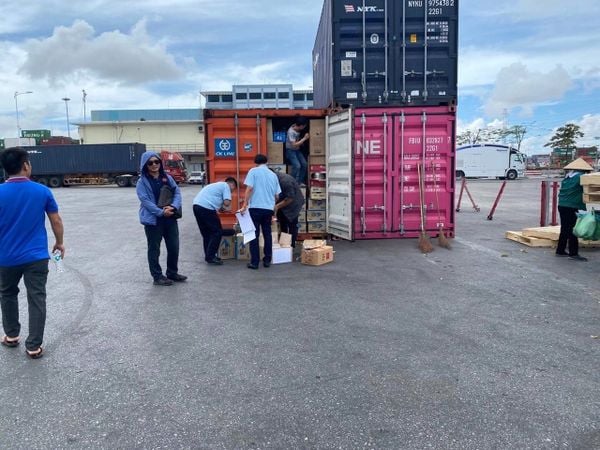
Physical inspection is the process in which Customs examines the actual goods to cross-check them against the details declared on the customs declaration. The inspection may cover: the type of goods, quantity, specifications, weight, labeling, markings, container number, seal number and origin of the goods.
Physical inspection is carried out for declarations in the red channel or, in some cases, where inspection is required under risk management regulations.
When Are Goods Subject to Physical Inspection?
Some situations that commonly require physical inspection include:
Red-Channel Routing by the System
After declaring in the VNACCS/VCIS system, a declaration is automatically routed into: the green channel, the yellow channel or the red channel. For the red channel, a business must have the goods physically inspected before clearance.
Goods Under Special Management
Some goods with a high risk level or subject to specialized management may be required to undergo physical inspection, such as: used machinery, chemicals, medical equipment, cosmetics, food, wood and wood products, and goods with suspicious declaration signs.
Planned Inspection
At certain times, the customs authority may carry out inspections under a thematic campaign or a risk management plan, even when a business has a good compliance history.
Does Physical Inspection Take a Long Time?
The answer is not necessarily. If: the documentation is complete, the declaration is accurate, the container is positioned correctly and the business coordinates well with customs officers, the inspection can be completed in a short time and the goods are cleared as soon as the inspection meets requirements.
Conversely, if problems arise such as: missing documents, wrong HS code, wrong quantity, no catalogue, incomplete specialized inspection or difficulty moving the container to the inspection area, processing time can be prolonged and additional costs incurred.
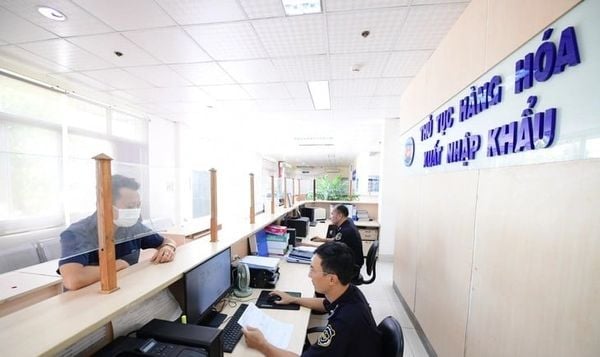
The Physical Inspection Process at Cat Lai Port
Step 1: Receive the Channel Classification Result
After transmitting the declaration, the business checks the result in the system. If the declaration is in the red channel, it needs to quickly prepare the documentation to register for physical inspection.
Step 2: Prepare the Documentation
The documentation usually includes:
- Customs declaration.
- Commercial Invoice.
- Packing List.
- Bill of Lading.
- Foreign trade contract.
- C/O (if any).
- Product catalogue.
- Specialized license.
- Other related documents.
Preparing complete documentation helps reduce the time spent explaining matters to the customs authority.
Step 3: Register for Physical Inspection
The business or the customs service provider contacts the customs authority to register an inspection time. The container is brought to the inspection area following the instructions of the port and the customs authority.
Step 4: Physical Inspection of the Goods
Customs cross-checks the actual goods against the declared details. The items usually inspected are: product name, product code, quantity, specifications, dimensions, origin, labeling, container number and seal number. Depending on the case, the inspection may apply to part or all of the shipment.
Step 5: Complete Clearance
If the inspection result matches the declaration documentation and the business has fulfilled its tax obligations, the shipment is cleared to leave the customs supervision area.
Factors That Prolong Physical Inspection Time
Some common causes include:
- Incomplete documentation.
- Wrong HS code.
- Wrong product name.
- Missing specialized license.
- No quality inspection or quarantine result yet.
- The container sitting deep in the yard, hard to retrieve for inspection.
- Having to open and inspect many packages.
- Detecting discrepancies between the actual goods and the declared details.
The more thoroughly a business prepares, the shorter the processing time.
How to Make Physical Inspection Faster
To limit waiting time, a business should:
- Prepare complete documentation before the goods arrive at port.
- Declare the HS code accurately.
- Check the information on the Invoice, Packing List and Bill of Lading.
- Prepare a catalogue or technical documentation if needed.
- Apply for the specialized license before opening the declaration.
- Monitor the channel classification result regularly.
- Coordinate closely with the port and the customs authority.
- Use a professional customs service if the goods have special requirements.
Should You Hire a Customs Service When Goods Are Inspected?
For businesses without much experience, using a customs service brings many benefits:
- Checking the documentation before declaring.
- Advising on the appropriate HS code.
- Preparing complete documentation.
- Representing the business in dealings with the customs authority.
- Monitoring the inspection process.
- Handling any issues that arise.
- Helping reduce clearance time and additional costs.
Conclusion
Goods being physically inspected at Cat Lai Port does not mean it will take a long time. With complete documentation, an accurate declaration and good coordination with Customs, the inspection process can be completed quickly without significantly affecting the delivery plan.
To limit risk and optimize clearance time, businesses should build a rigorous document-checking process, keep up with the latest customs regulations and consider using a professional customs service for shipments with special requirements.
We are committed to delivering optimal solutions that save time, reduce costs and minimize risk in the customs declaration process at Cat Lai Port. Contact Embassy Freight right away via Hotline: 0936911656 for the earliest possible consultation and quotation!
Need a shipping and import-export quotation?
Embassy Freight provides sea freight, air freight, customs declaration and turnkey import-export outsourcing. Get a free quote or explore our services.