
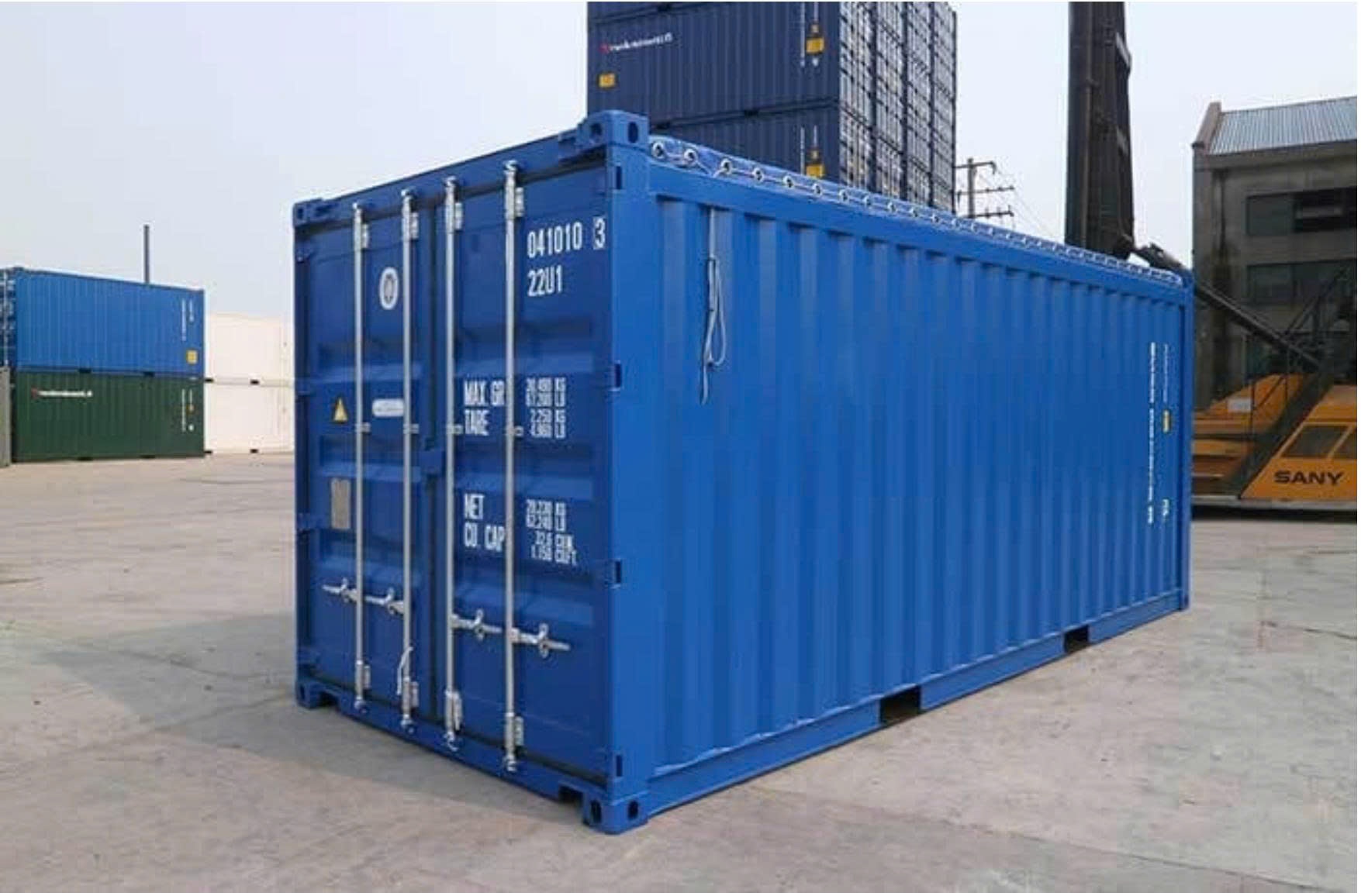
There are many specialized types of containers on the market today, including the open top container. So what is an open top container? What are its design features and what material is it made from? What advantages does an open top container offer over a standard container? Let's find out with Sancopack in the article below!
What Is an Open Top Container?An open top container (open top, abbreviated OT), also known as an open-roof container, is a container without a roof, covered only by a tarpaulin. This type of container is used to transport bulky, large-sized cargo such as machinery, construction equipment, long timber, and so on.
The Structure of an Open Top Container and How to Remove Its TopThe structure of an open top container
- Container body: Like other types of containers, the body of an Open Top container is made from stainless steel or high-quality metal, capable of bearing loads and protecting the goods inside.
- Container top: The top of an Open Top container can be removable or foldable. It has an open structure on the upper side, making it easy to load and unload goods using a crane or similar equipment.
- Rubber or PVC seal: Some Open Top containers have a rubber or PVC strip that blocks water or liquids, protecting the goods inside from the weather or limiting water leakage.
How to remove the top of an open top container
- Prepare tools and safety gear: Make sure you have prepared all the necessary tools such as a crane, cables, and safety equipment like a hard hat, gloves and safety glasses.
- Identify the locking points of the top: An Open Top container has joints or hinges on the sides of the top. Identify and work with these hinges to remove the top.
- Use a crane or lifting equipment: Use a suitable crane or lifting equipment to lift the top of the container from above. Make sure the lifting is done safely and steadily.
- Remove the container top: Use a crane or lifting equipment to lift the top to a safe height, then remove it from the container body.
- Check safety and store the top: After removing the Open Top container's top, ensure the safety of everyone and the goods inside. Store the container top safely and conveniently.
Remember that removing the top of an Open Top container requires skill, experience and caution to ensure the safety of everyone and the goods. Always follow safety rules and use protective equipment when working with containers.
Advantages of the Open Top Container
- Good load-bearing and heat resistance: The open-roof container is made from rust-resistant steel, so it is highly durable, with good load-bearing and heat resistance. This ensures the open-roof container remains sturdy and able to transport goods in harsh, adverse weather conditions.
- Specialized for bulky cargo: Compared with standard 20-foot containers, the open-roof container has a clear advantage for transporting heavy goods that fit within a 20-foot container but are too bulky to pass through the container doors; the open-roof container is then an ideal, perfect solution. It is mainly used to carry large volumes of bulk and oversized cargo in large quantities.
- Saves effort when loading and unloading: Without a roof, goods can be loaded or unloaded through the top of the container vertically using a crane with ease. This saves labor when loading and unloading goods.
- Easy loading and unloading: After goods are loaded into the container, it is covered and sealed with a separate tarpaulin over the top. The roof is made of removable bars, so goods can be craned in or out from any position with ease, and the walls can be made into a tailboard or door for easy access to the goods.
Common Types of Open Top Containers
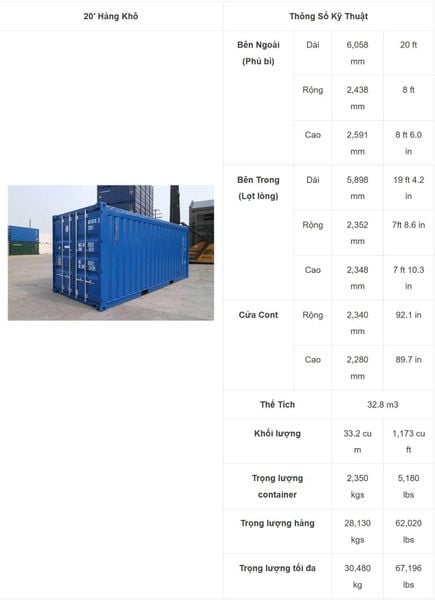
20-foot Open Top Container (OT)
The 20-foot Open Top container is designed from an original empty 20-foot storage container with the same technical specifications, being open-roofed with a tarpaulin top.
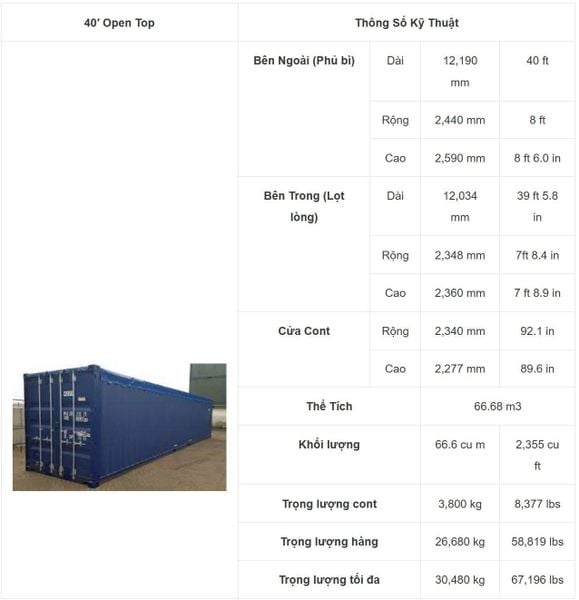
40-foot Open Top Container (OT)
The 40-foot Open Top container is designed with the same technical specifications as a standard 40-foot container, being open-roofed with a tarpaulin top. It serves the same purpose as the 20-foot open top.
40-foot open top container with 6 side-opening doors
The 40-foot container is technically modified, with its roof opened to become an open top container fitted with 6 additional side-opening door sets for easy loading and unloading, complete with a tarpaulin cover; dimensions (L 12,192mm x W 2,438mm x H 1,500mm).
Reputable, Quality Supplier of Open Top Containers in Ho Chi Minh City
With many years of experience in the field and service quality always as our top priority, Sancopack is committed to bringing customers products of a quality that meets all their usage needs.
Through the content above, you should now clearly understand what an open top container is, along with related information and how to remove the container top.
If you need a company specializing in container services, especially reefer containers, contact Embassy Freight right away via hotline: 0936911656 for the fastest advice and quote.
Contact Information
EMBASSY FREIGHT SERVICES (VIETNAM)
Address: Room 4.25, 4th Floor, 8 Hoang Minh Giam, Ward 9, Phu Nhuan District, Ho Chi Minh City.
Email: info@embassyfreight.com.vn
Contact for Consultation:
- 0936911656 (HCM) - Embassy Freight Services (VN) – Southern Region
- 0937361637 (Hanoi) - Embassy Freight Services (VN) – Northern Region
Need a shipping quote?
Embassy Freight offers sea freight, air freight and full-service customs clearance. Get a free quote or explore our services.